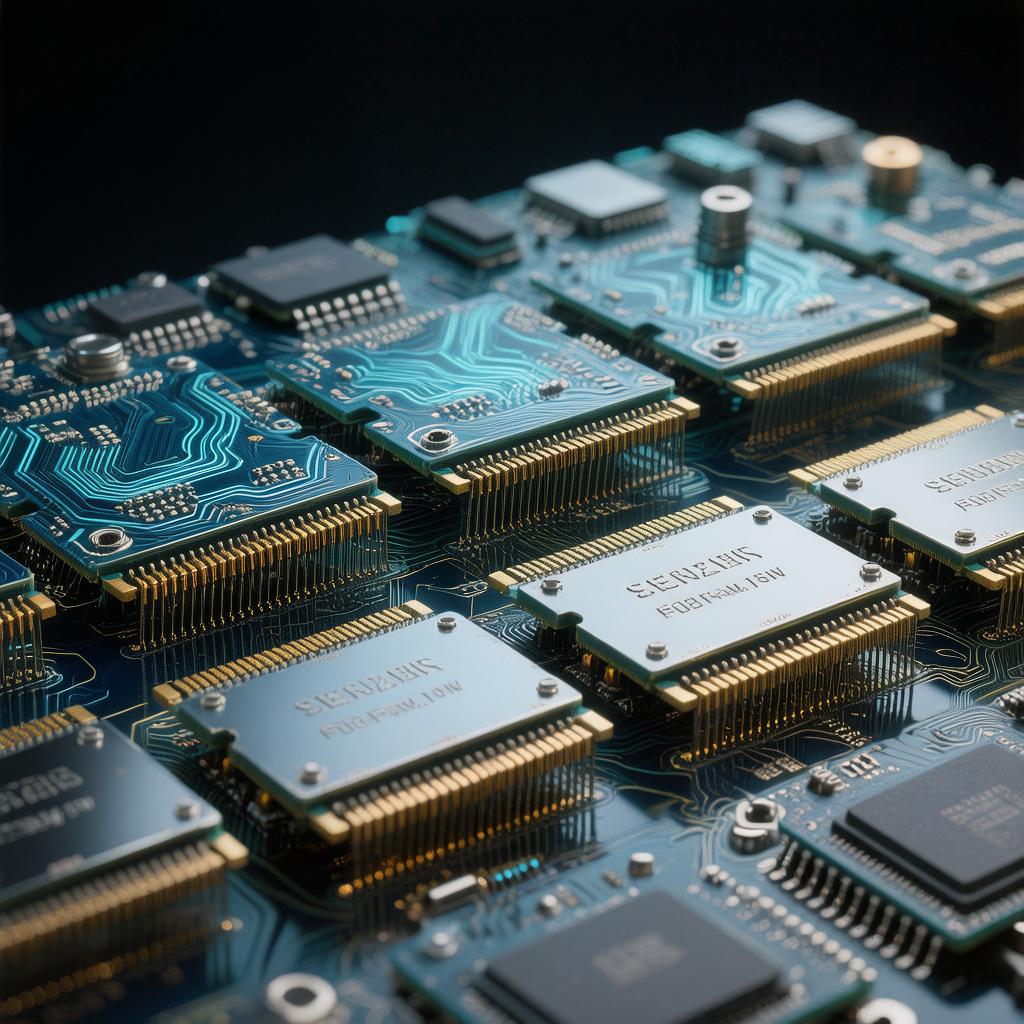

The artificial intelligence revolution is reshaping the semiconductor industry at an unprecedented pace. From data centers to edge devices, AI chips have become the engine driving the next wave of technological innovation. In 2024, the AI semiconductor market is projected to exceed $100 billion, with demand continuing to outpace supply across multiple segments.
The AI Chip Landscape
The AI chip market can be broadly categorized into three segments: data center/training chips, inference accelerators, and edge AI processors. Each segment has its own set of dominant players, technical requirements, and supply dynamics.
Data Center and Training
NVIDIA continues to dominate the data center AI training market with their A100 and H100 GPUs. However, supply constraints have created opportunities for alternatives:
- AMD MI300 Series: Strong competitor with competitive performance-per-watt
- Intel Gaudi: Growing ecosystem with attractive pricing
- Google TPU: Proprietary solution for cloud AI workloads
- Amazon Trainium: AWS-optimized training accelerators
Edge AI Processors
The edge AI market is more fragmented, with solutions optimized for specific applications:
- NVIDIA Jetson: Comprehensive platform for robotics and vision
- Google Coral: Cost-effective TPU for IoT applications
- Intel Movidius: VPU solutions for computer vision
- Qualcomm: AI acceleration in mobile and automotive
Supply Chain Challenges
The explosive demand for AI chips has created significant supply chain challenges. Lead times for high-end GPUs have extended to 6-12 months, with some specialized accelerators facing even longer waits. Several factors contribute to these constraints:
"The demand for AI compute is growing exponentially while supply expansion is linear. This fundamental mismatch is creating a new class of supply chain challenges."
Manufacturing Constraints
Advanced AI chips require cutting-edge process nodes (5nm, 4nm, and below), which have limited manufacturing capacity. TSMC and Samsung are the primary foundries, with Intel emerging as a third option.
Memory Bottlenecks
High-bandwidth memory (HBM) is critical for AI performance but faces its own supply constraints. HBM3 and the upcoming HBM3e are in particularly short supply.
Sourcing Strategies for 2024
For procurement teams navigating this challenging market, several strategies can help secure supply:
1. Diversify Your Supplier Base
Don't rely on a single vendor. Evaluate alternatives from AMD, Intel, and emerging players. While NVIDIA dominates training, inference workloads offer more flexibility.
2. Plan for Longer Lead Times
Build 6-12 month forecasts into your procurement planning. Consider placing orders well ahead of actual need, especially for high-demand SKUs.
3. Consider Cloud Alternatives
For variable workloads, cloud AI services can provide flexibility without the capital investment and supply risk of owning hardware.
4. Explore Edge Solutions
For inference workloads, edge AI processors often provide better availability and cost-effectiveness than data center GPUs.
Market Outlook
Looking ahead, several trends will shape the AI chip market:
- Continued growth in AI model sizes driving demand for more powerful chips
- Increased focus on energy efficiency as power costs rise
- Growth of specialized chips for specific AI workloads
- Expansion of domestic manufacturing in the US and Europe
- Integration of AI acceleration into general-purpose processors
Conclusion
The AI chip market in 2024 presents both opportunities and challenges. While supply constraints persist, the expanding ecosystem of vendors and solutions provides more options than ever before. Success requires proactive planning, supplier diversification, and a clear understanding of workload requirements.
For organizations building AI capabilities, partnering with experienced component suppliers who understand the market dynamics can provide a significant advantage in securing the right chips at the right time.